
Dog Swollen Belly: Causes and What This Means
A dog swollen belly is one of the most common and concerning symptoms that brings pet owners to the vet. If your dog’s abdomen looks distended, feels hard or tight, or your dog seems uncomfortable, it’s important to take the symptom seriously. A swollen belly in a dog can have many causes, ranging from mild digestive issues to emergencies that require immediate care. At Midtown Veterinary Practice in Huntsville, AL, we help dog owners navigate these concerns with clarity and urgency when it matters most.
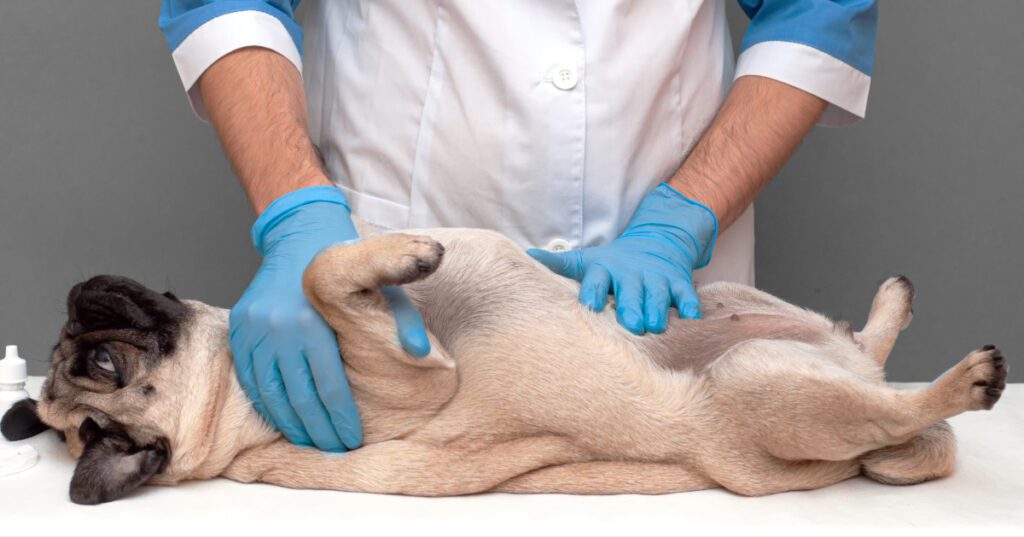
What Does a Swollen Belly in a Dog Look Like?
A dog swollen belly may be obvious or subtle depending on the cause. In some cases, the distension is dramatic and develops rapidly. In others, the abdomen may gradually enlarge over days or weeks. You might notice your dog’s stomach looks bloated, rounded, or asymmetrical. They may walk hunched or seem reluctant to move.
It’s worth noting that a swollen or distended abdomen is not always caused by something inside the gut itself. Fluid accumulation, organ enlargement, or even masses can cause abdominal distension that may look similar from the outside. A veterinary exam is the only way to determine the true cause.
What Causes a Swollen Belly in Dogs?
There are many potential causes of a dog swollen belly, and they vary widely in severity. Understanding the most common possibilities can help you assess your dog’s situation and act accordingly.
Bloat (Gastric Dilatation-Volvulus)
Bloat, technically called gastric dilatation-volvulus (GDV), is the most life-threatening cause of a swollen dog belly. It occurs when the stomach fills with gas and, in severe cases, twists on itself, cutting off blood supply. GDV can be fatal within hours if not treated surgically. Large, deep-chested breeds such as Great Danes, German Shepherds, and Standard Poodles are at the highest risk, but any dog can develop bloat.
If your dog has a suddenly swollen belly, is restless, retching without producing vomit, drooling excessively, or showing signs of distress, this is a veterinary emergency. Do not wait to seek care.
Ascites (Fluid Accumulation)
Ascites is the accumulation of fluid in the abdominal cavity. It causes a dog’s belly to appear swollen, and the abdomen often feels soft or fluid-filled rather than firm. Ascites is usually a symptom of an underlying disease, such as heart disease, liver disease, kidney failure, protein-losing conditions, or certain cancers. A dog with ascites typically requires both treatment for the underlying condition and management of the fluid itself.
Pregnancy or Pyometra
In intact female dogs, a swollen belly may indicate pregnancy. However, a potentially life-threatening condition called pyometra can also cause abdominal distension. Pyometra is an infection of the uterus that causes it to fill with pus, and it can be fatal if not treated promptly. If your unspayed female dog has a swollen belly and seems lethargic, is drinking excessively, or has a vaginal discharge, contact a veterinarian immediately.
Intestinal Obstruction
Dogs are notorious for swallowing things they shouldn’t. A foreign body obstruction in the stomach or intestines can cause abdominal distension, pain, vomiting, and lethargy. Left untreated, an intestinal blockage can become a serious or life-threatening condition.
Organ Enlargement
Enlargement of the liver, spleen, or kidneys can contribute to a visibly swollen dog belly. Organ enlargement may result from infection, inflammation, or tumor growth. A splenic mass, in particular, is a common concern in older large-breed dogs and can cause sudden, severe abdominal swelling if the mass ruptures.
Intestinal Parasites
In puppies, a potbellied or swollen belly appearance is often associated with a heavy intestinal parasite burden. Roundworms are the most common culprit. A puppy with a swollen belly, poor coat condition, and slowed growth should be examined and tested for parasites promptly.
Is a Swollen Dog Belly Always an Emergency?
Not every case of a dog swollen belly is an emergency, but many causes do require timely veterinary evaluation. The urgency depends on other symptoms your dog is showing. A gradual, soft swelling in a stable dog is less immediately dangerous than a sudden, rigid distension in a dog that is clearly in distress.
As a general rule, contact Midtown Veterinary Practice or seek emergency care if your dog’s belly is suddenly swollen and they are also showing any of the following signs:
- Unproductive retching or attempting to vomit without result
- Rapid, shallow, or labored breathing
- Pale, white, or bluish gums
- Weakness, collapse, or sudden inability to stand
- Signs of severe pain, including crying, hunching, or refusing to move
What Does a Dog Swollen Belly Feel Like?
Gently touching your dog’s abdomen can sometimes give you clues about what’s happening, though it’s not a replacement for a professional examination. A dog swollen belly caused by gas or GDV often feels hard and tight, like a drum. One caused by fluid (ascites) typically feels soft and fluid-filled, and you may even notice the fluid shifts when the dog moves position. A belly that is firm in one area but normal in others may indicate an organ or mass rather than generalized distension. If your dog reacts with pain or discomfort when you touch their abdomen, that’s a strong signal to seek veterinary care sooner rather than later.
How Is a Swollen Belly in Dogs Diagnosed?
Diagnosing the cause of a dog’s swollen belly typically involves a combination of physical examination, diagnostic imaging, and lab work. At Midtown Veterinary Practice, our team uses abdominal X-rays and ultrasound to visualize internal structures and identify the source of distension. Blood and urine testing can reveal signs of infection, organ dysfunction, or systemic disease.
Signs to Watch for Alongside a Swollen Belly
The swollen belly itself is one piece of a larger clinical picture. Accompanying symptoms provide important context and can help your veterinary team move quickly toward the right diagnosis.
- Vomiting or diarrhea: May suggest gastrointestinal involvement, obstruction, or infection
- Weight loss with abdominal enlargement: Can point to cancer, protein loss, or liver disease
- Increased thirst and urination: Associated with conditions like Cushing’s disease, kidney disease, or pyometra
- Lethargy or decreased appetite: A general sign that something is affecting your dog’s overall health
- Abdominal pain: Often seen with obstruction, bloat, pancreatitis, or masses
Breed and Age Considerations for a Swollen Dog Belly
Certain dogs are more prone to specific causes of abdominal swelling. As mentioned, large and giant deep-chested breeds face higher risk for GDV. Older dogs are more susceptible to splenic tumors and other organ-related masses. Small breeds may be more prone to liver shunts that cause abdominal distension. And senior dogs across all breeds face increased risk for cancer, which can manifest as swollen abdomens in a variety of ways. Puppies with potbellies, as noted, are frequently dealing with parasites, but this should always be confirmed with testing rather than assumed.
What Your Dog’s Swollen Belly Is Telling You
A dog swollen belly is your pet’s body signaling that something needs attention. It may be a minor issue that resolves with basic care, or it may be a warning sign of a serious underlying condition. Either way, an evaluation at Midtown Veterinary Practice in Huntsville gives you and your dog the answers needed to move forward.
Our team is experienced in assessing abdominal concerns in dogs of all ages and breeds. We take every swollen belly seriously, because we know how much your dog’s health means to you. If you’ve noticed changes in your dog’s abdomen, call us at (256) 883-4148 or request an appointment online. Early evaluation often makes all the difference in outcome.